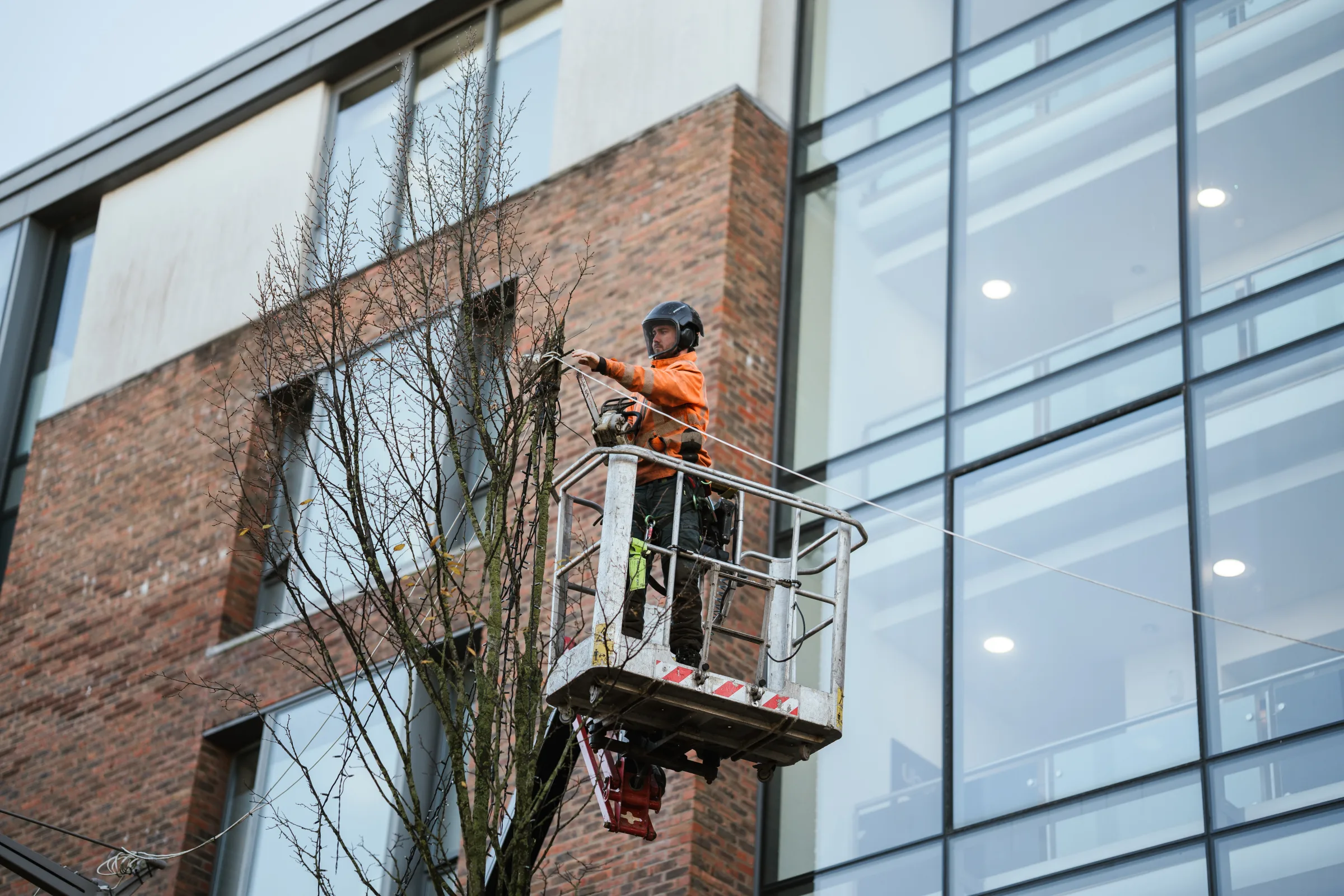
A tree that’s blocking light, hanging over the roof or just getting too big doesn’t automatically need to come down. There are several ways to deal with it, and the right one depends on the tree and what you want from it.
Crown thinning: more light, same tree
Thinning takes out a share of the smaller branches evenly through the crown. The tree keeps its size and shape, but light filters through and wind passes more easily. It’s ideal for a tree that’s making a garden gloomy.
Crown reduction: a smaller tree
Reduction shortens branches all round to suitable growth points, bringing down the height and spread while keeping a natural outline. It’s usually the answer for a tree that has outgrown its space.
Crown lifting: clearance underneath
Lifting removes the lowest branches to clear a lawn, path, driveway or road. It frees up the space below without touching the upper crown.
Deadwooding: safety first
Taking out dead, dying and broken branches makes a tree safer and tidier, and it’s often done alongside other pruning.
Felling: when the tree has to go
Removal makes sense when a tree is dead, unsafe, badly diseased, damaging a building or simply in the wrong place. Close to houses, it’s normally taken down in sections.
Why we don’t top trees
Topping or lopping — cutting the top off a tree with no regard to its structure — injures it and triggers fast, weakly attached regrowth. Within a few years the problem is usually worse than before.
Still not sure?
Book a free site visit and one of our arborists will talk you through the options for your tree, with a clear quotation for each.